Polyurethane, NBR or Viton: Comparing Materials for Sealing Applications

Table of Contents
Table of Contents
- Why Does Seal Material Matter?
- Polyurethane Seals: Properties and Applications
- Key Properties of Polyurethane
- Common Applications
- NBR Seals: Properties and Applications
- Key Properties of NBR
- Common Applications
- Viton/FKM Seals: Properties and Applications
- Key Properties of FKM
- Common Applications
- Polyurethane vs NBR vs Viton: Key Differences
- Which Material Is Better for Hydraulic Applications?
- How to Choose the Right Seal Material
- Identify the Fluid or Chemical Exposure
- Check Operating Temperature
- Assess Pressure, Movement and Wear
- Consider the Working Environment
- Verify the Material Specification
- Common Material Selection Mistakes
Selecting the right material is an important part of hydraulic seal specification. A seal must maintain its sealing function while dealing with pressure, friction, temperature changes and exposure to hydraulic fluids. Choosing an unsuitable material can contribute to premature wear, swelling, hardening or seal failure.
Three materials commonly considered for industrial sealing applications are polyurethane, nitrile butadiene rubber (NBR) and fluoroelastomer (FKM), often associated with the Viton brand. Each offers different properties and is suited to particular operating conditions.
For engineers, equipment manufacturers and procurement teams, understanding these differences can make seal selection more straightforward. For example, polyurethane hydraulic seals are often considered for applications where wear resistance is important, while NBR is widely used in oil-compatible sealing applications. FKM may be appropriate where higher temperature resistance or compatibility with certain chemicals is required.
However, there is no single material that suits every hydraulic system. The correct choice depends on the specific material grade, hydraulic fluid, operating temperature, pressure, movement and equipment design.
This guide compares polyurethane, NBR and Viton/FKM to help identify the factors that should be considered when selecting materials for hydraulic and industrial sealing applications.
Why Does Seal Material Matter?
Hydraulic seals are exposed to operating conditions that can vary considerably between machines and industries. The material must maintain its physical properties while performing its intended sealing function.
Different materials respond differently to pressure, friction, heat, chemicals and environmental exposure.
For example, a seal operating inside a hydraulic cylinder may experience repeated reciprocating movement, while another seal in a static assembly may remain under compression for extended periods. These applications create different material requirements.
Several properties influence seal performance:
- Wear resistance: Determines how well a material withstands friction and repeated contact with moving surfaces.
- Fluid compatibility: Influences whether the material maintains its properties when exposed to hydraulic oils, lubricants or other fluids.
- Temperature resistance: Determines the operating temperature range within which the material can perform reliably.
- Compression characteristics: Affect how the material responds to sustained pressure and deformation.
- Chemical resistance: Determines suitability for exposure to particular chemicals and operating media.
- Mechanical strength: Influences resistance to tearing, deformation and other forms of physical damage.
Material properties must also be considered alongside seal geometry and installation conditions. For instance, selecting a material with good wear resistance does not automatically guarantee suitable performance if the seal profile, dimensions or installation arrangement are incorrect.
The most suitable material should therefore be selected according to the complete equipment specification.
Polyurethane Seals: Properties and Applications
Polyurethane is commonly used in hydraulic sealing applications because certain formulations offer a useful combination of wear resistance, mechanical strength and flexibility. These properties make polyurethane a common consideration for hydraulic cylinders and heavy-duty equipment where seals experience repeated movement and contact with metal surfaces.
Key Properties of Polyurethane
One of the main reasons polyurethane seals are used in hydraulic systems is their potential resistance to abrasion and mechanical wear. Depending on the formulation and hardness, polyurethane can offer:
- Good abrasion resistance.
- High mechanical strength.
- Resistance to tearing.
- Good resistance to extrusion in suitable designs.
- Flexibility for dynamic sealing applications.
- Suitability for repeated movement under appropriate conditions.
These characteristics can make polyurethane suitable for piston seals, rod seals and other hydraulic sealing components.
Common Applications
Polyurethane hydraulic seals are frequently considered for equipment that operates under demanding mechanical conditions. Examples include:
- Hydraulic cylinders.
- Earthmoving machinery.
- Mining equipment.
- Industrial hydraulic systems.
- Mobile hydraulic machinery.
- Heavy-duty reciprocating applications.
Their wear resistance can be useful in applications where components experience frequent movement and mechanical contact.
However, polyurethane is not suitable for every hydraulic environment. Its temperature resistance and compatibility with fluids depend on the specific grade and formulation. Some polyurethane compounds may be unsuitable for prolonged exposure to certain fluids, elevated temperatures or particular environmental conditions.
Before selecting polyurethane seals, it is important to confirm the manufacturer's technical specifications against the intended application.
NBR Seals: Properties and Applications
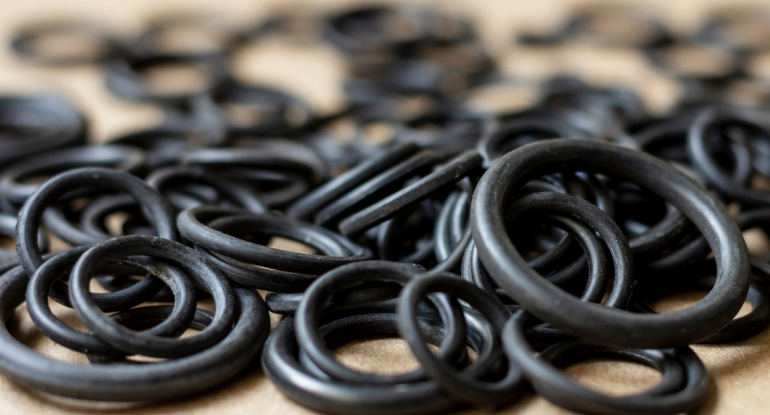
Nitrile butadiene rubber (NBR), commonly known as nitrile rubber, is widely used in industrial and hydraulic sealing applications. It is particularly recognised for its compatibility with many petroleum-based oils and fuels, making it a common material for O-rings, hydraulic seals and general-purpose industrial sealing components.
Key Properties of NBR
NBR material offers several useful characteristics, although its exact performance depends on the compound formulation. Common properties include:
- Good compatibility with many mineral oils and petroleum-based fluids.
- Useful flexibility and elasticity.
- Resistance to certain fuels and lubricants.
- Suitability for many general hydraulic sealing applications.
- Availability in different hardness grades and formulations.
NBR is often selected when oil compatibility and general-purpose sealing performance are important considerations.
Common Applications
NBR seals are used in a variety of industrial and hydraulic applications, including:
- Hydraulic cylinders.
- Oil sealing assemblies.
- O-rings and static seals.
- Industrial machinery.
- General-purpose hydraulic systems.
- Fuel and lubricant sealing applications.
Despite its broad use, NBR has limitations. Its temperature resistance may be lower than that of some specialised FKM compounds. Certain chemicals, ozone exposure and elevated temperatures can also affect its performance.
Not all NBR formulations offer identical fluid compatibility. Therefore, the specific compound should always be checked against the hydraulic fluid and operating temperature.
Viton/FKM Seals: Properties and Applications
Viton is a registered brand associated with fluoroelastomer materials, commonly identified as FKM. FKM materials are often considered for applications where resistance to higher temperatures, oils and certain chemicals is required. They are used across various industrial sectors, particularly where conventional elastomers may not provide the required chemical or thermal performance.
Key Properties of FKM
Depending on the formulation, FKM materials can provide:
- Resistance to many oils and fuels.
- Good resistance to numerous chemicals.
- Higher temperature capability than many standard elastomers.
- Resistance to ageing in suitable environments.
- Good sealing performance in selected industrial applications.
These properties make FKM an option worth considering when temperature and chemical exposure are important factors.
Common Applications
Viton material and other FKM compounds may be used in:
- Industrial sealing systems.
- Oil and fuel applications.
- Chemical processing equipment.
- Automotive components.
- High-temperature machinery.
- Selected hydraulic applications.
However, FKM is not universally compatible with every hydraulic fluid or chemical. For example, certain FKM formulations may have limitations with some hot water, steam, glycol-based fluids or specific chemical exposures.
FKM can also be less suitable than polyurethane for applications where high abrasion resistance and resistance to mechanical damage are the primary requirements.
The correct FKM compound should be selected using manufacturer compatibility information rather than relying on the general properties of the material category.
Polyurethane vs NBR vs Viton: Key Differences
Although all three materials are used in industrial sealing applications, their properties make them suitable for different operating conditions. The following table provides a general comparison.
| Comparison factor | Polyurethane (PU) | NBR | Viton/FKM |
|---|---|---|---|
| Main strength | Wear and abrasion resistance | Oil and fuel compatibility | Chemical and temperature resistance |
| Mechanical properties | Generally strong and abrasion resistant | Flexible with useful mechanical properties | Good elastomeric performance, depending on grade |
| Temperature resistance | Depends on formulation | Moderate, depending on compound | Generally higher than standard NBR |
| Oil compatibility | Depends on formulation and fluid | Good with many petroleum-based oils | Good with many oils and fuels |
| Abrasion resistance | Generally very good | Moderate to good, depending on compound | Generally not the primary selection advantage |
| Common applications | Hydraulic cylinders and heavy-duty equipment | O-rings and general hydraulic sealing | Higher-temperature and selected chemical applications |
| Main limitation | Some grades have limited temperature or fluid compatibility | Limited suitability for some high-temperature and chemical environments | Higher material cost and possible limitations with specific fluids |
Note: This comparison is indicative only. Exact performance depends on the material grade, compound formulation, seal geometry, manufacturer specifications and operating conditions.
Which Material Is Better for Hydraulic Applications?
There is no universal winner.
Polyurethane may be a suitable option when abrasion resistance and mechanical durability are important. NBR may be appropriate for general hydraulic applications involving compatible mineral oils and petroleum-based fluids. FKM may be worth considering where elevated temperatures or exposure to certain chemicals create additional material requirements.
The correct selection should be based on the equipment specifications rather than a general comparison of material properties.
How to Choose the Right Seal Material
Selecting an appropriate seal material involves reviewing the entire operating environment. The following considerations can help engineers and procurement teams make a more informed decision.
Identify the Fluid or Chemical Exposure
Start by confirming the type of hydraulic fluid, oil, lubricant or other substance that will contact the seal. Different materials have different compatibility characteristics. A compound that performs well with one hydraulic oil may not be suitable for another fluid.
Where possible, obtain the fluid manufacturer's technical information and compare it with the seal material manufacturer's compatibility data. Also consider whether the equipment may encounter cleaning chemicals, lubricants or other substances during maintenance.
Check Operating Temperature
Temperature affects the physical properties of elastomers and other sealing materials. Consider both the normal operating temperature and any expected temperature peaks.
Excessive heat can contribute to material hardening, degradation or loss of sealing performance. Low temperatures may affect flexibility and the ability of a seal to maintain contact with surrounding surfaces. The selected material should remain within its specified operating temperature range throughout the intended application.
Assess Pressure, Movement and Wear
Pressure and movement influence the mechanical demands placed on a seal. A hydraulic rod seal, for example, experiences repeated movement and contact with the cylinder rod. A piston seal operates within a different arrangement and may experience different pressure and friction conditions.
Consider the following:
- Normal and maximum operating pressure.
- Pressure fluctuations.
- Reciprocating or rotary movement.
- Operating speed.
- Surface finish of mating components.
- Potential extrusion gaps.
- Expected duty cycles.
These factors influence both material selection and seal design.
Consider the Working Environment
The surrounding environment can affect the condition and service life of sealing components. Equipment operating in mining, construction and industrial environments may encounter dust, dirt, moisture, abrasive particles and changing temperatures. For outdoor machinery, exposure to sunlight and ozone may also be relevant.
Material selection should account for these environmental conditions alongside the internal hydraulic operating requirements.
Verify the Material Specification
Once the application requirements are understood, confirm the exact material grade and compound. Do not assume that all polyurethane, NBR or FKM materials have the same properties.
Request relevant manufacturer specifications and technical compatibility information. Where necessary, discuss the application with a hydraulic seal specialist who can help assess suitable material options.
For further information about hydraulic sealing components, the hydraulic seals guide provides a useful reference.
Common Material Selection Mistakes
Choosing a seal material without considering the complete application can result in unnecessary maintenance and premature component failure. Several common mistakes are worth avoiding.
- Choosing by price alone. A lower-cost material may not provide the properties required for the operating environment. Initial purchase price should be considered alongside compatibility, performance requirements and potential replacement frequency.
- Assuming all grades have identical properties. Polyurethane, NBR and FKM each include different formulations. Material properties can vary between manufacturers and grades, so general descriptions should not replace technical specifications.
- Overlooking fluid compatibility. A material that performs well in one hydraulic system may deteriorate when exposed to a different fluid. Always confirm compatibility with the actual operating media.
- Ignoring temperature extremes. Considering only normal operating temperatures can overlook short periods of elevated heat or exposure to cold conditions. Both normal and peak temperatures should be assessed.
- Selecting material without considering seal design. Material selection and seal geometry work together. A suitable material may still perform poorly if the seal profile, dimensions, clearances or installation conditions are incorrect.
- Ignoring the operating environment. Dust, contamination, moisture and abrasive particles can influence seal wear. These conditions should be considered when specifying a material and sealing arrangement.
Frequently Asked Questions
Conclusion: Selecting the Right Material for Reliable Sealing
Polyurethane, NBR and Viton/FKM each offer different properties for industrial and hydraulic sealing applications. Polyurethane is commonly considered for its wear resistance, NBR for its compatibility with many petroleum-based fluids, and FKM for applications involving higher temperatures or certain chemical exposures.
However, selecting the right material requires more than comparing general performance characteristics. Fluid compatibility, operating temperature, pressure, movement, seal geometry and environmental conditions must all be considered.
For engineers, equipment manufacturers and procurement teams, a clear understanding of these requirements can help reduce material selection errors and support more appropriate sealing solutions.
Seal Tech Mackay provides hydraulic seal manufacturing, CNC machining, technical support and assistance with seal material selection for specialised applications. If you are unsure whether polyurethane, NBR or FKM is suitable for your equipment, discussing the application and operating specifications is a practical starting point.
Contact Seal Tech Mackay to discuss your hydraulic sealing requirements and available material options. You can also explore the hydraulic cylinder seals available in Queensland for further information about hydraulic sealing solutions.