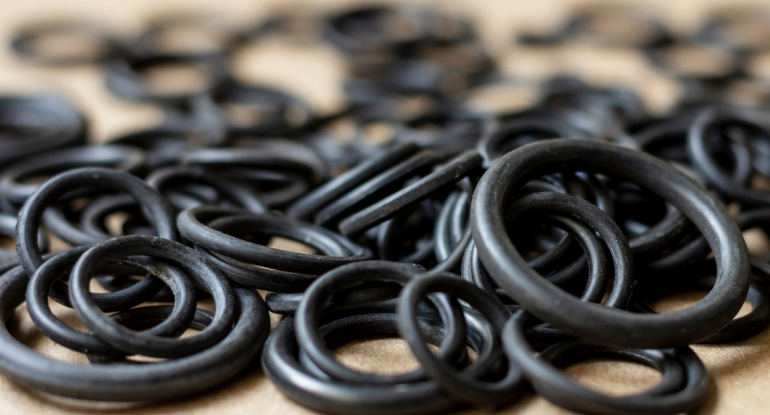
Custom Hydraulic Seals for Equipment with Non-Standard Requirements

Table of Contents
Table of Contents
- What Are Custom Hydraulic Seals?
- When Are Custom Hydraulic Seals Needed?
- Non-Standard Dimensions or Seal Profiles
- Obsolete or Hard-to-Find Seals
- High-Pressure Applications
- Special Operating Environments
- Custom Hydraulic Seals vs Standard Seals
- What Information Is Needed to Specify a Custom Seal?
- How Are Custom Hydraulic Seals Developed?
- Application Assessment
- Design and Material Selection
- Machining or Manufacturing
- Inspection and Fit Verification
- How to Find the Right Custom Hydraulic Seal Supplier
Hydraulic systems are used across industries where machinery must operate reliably under demanding conditions. From heavy equipment and mining machinery to industrial cylinders and specialised hydraulic assemblies, every application has specific sealing requirements. However, standard catalogue seals do not always provide the correct fit or performance for every machine.
This is where custom hydraulic seals can provide a practical solution. They are designed to address specific equipment requirements, including unusual dimensions, specialised seal profiles, demanding operating pressures and challenging working environments.
For engineers, original equipment manufacturers (OEMs) and maintenance managers, choosing the right seal involves more than finding a replacement with similar dimensions. Factors such as material compatibility, operating temperature, pressure, movement and equipment design all influence seal performance.
Custom seal manufacturing allows these factors to be considered when developing a suitable component. It can also help address replacement challenges when original seals are obsolete or difficult to source.
In this guide, we explore when custom hydraulic seals may be needed, how they differ from standard products, what information is required during specification and how the manufacturing process works.
What Are Custom Hydraulic Seals?
Custom hydraulic seals are sealing components manufactured or designed to meet the specific requirements of a hydraulic system. Unlike standard catalogue products, which are produced in established sizes and profiles, custom seals can be developed around particular equipment dimensions and operating conditions.
A hydraulic seal prevents fluid from escaping while helping maintain the pressure required for a hydraulic system to function. Depending on its position and purpose, a seal may prevent external leakage, separate pressure zones or stop contaminants from entering an assembly.
Several factors determine the design of a custom seal:
- Dimensions: Internal diameter, external diameter, width and overall cross-section.
- Seal profile: The shape and configuration required to fit the housing or cylinder groove.
- Material: The material's resistance to hydraulic fluids, temperature, pressure and wear.
- Operating specifications: Pressure, movement speed, temperature range and expected service conditions.
- Equipment requirements: The design of the cylinder, piston, rod or other hydraulic assembly.
Customisation should always address an identifiable equipment or performance requirement. It is not simply a matter of producing a seal in a different size. The design must suit the application and provide the required sealing function.
When Are Custom Hydraulic Seals Needed?
There are several situations where a standard hydraulic seal may not be suitable. Understanding these circumstances can help engineers and maintenance teams determine whether a custom solution is worth investigating.
Non-Standard Dimensions or Seal Profiles
Some hydraulic equipment uses specialised grooves, housings or assemblies that do not accommodate standard seal dimensions. This can occur with older machinery, modified hydraulic cylinders or equipment designed for a specific industrial application. In these situations, a standard seal may be too large, too small or incorrectly shaped for the available installation space.
Custom hydraulic seals can be manufactured to suit the required dimensions and profile, provided the design is technically suitable for the application. Accurate measurements are particularly important. Even small dimensional differences can affect seal compression, installation and performance.
Obsolete or Hard-to-Find Seals
Older machinery can present difficulties when replacement seals are no longer available through the original manufacturer. Equipment may still be operational, but sourcing the correct replacement component can become challenging. This is particularly relevant for industrial plants, mining operations and heavy equipment that remain in service for many years.
Custom manufacturing may provide an alternative when an original seal cannot be sourced. An existing seal, technical drawing or measured sample can help establish the dimensions and profile required for a replacement.
However, the original design should be assessed rather than copied without consideration. Changes in operating conditions, materials or equipment condition may influence the suitability of a replacement seal.
High-Pressure Applications
Hydraulic systems operating at elevated pressures place additional demands on sealing components. The seal must maintain contact with the relevant surfaces while resisting deformation, wear and extrusion.
The selection of high pressure hydraulic seals requires careful consideration of several factors:
- Maximum and fluctuating operating pressure.
- Clearance gaps between mating components.
- Seal geometry and installation configuration.
- Material strength and resistance to deformation.
- Operating temperature and hydraulic fluid compatibility.
Extrusion is a particular concern in high-pressure applications. It occurs when seal material is forced into the clearance gap between components, potentially resulting in damage or premature failure. Depending on the application, the design may require a different material, seal profile or supporting component. These decisions should be based on the equipment specifications rather than pressure ratings alone.
Special Operating Environments
Not all hydraulic systems operate under the same environmental conditions. Some equipment experiences temperature extremes, abrasive contamination, continuous movement or extended operating cycles. For example, machinery used in mining and industrial environments may encounter dust, dirt and other contaminants that contribute to seal wear.
Material selection is therefore an important part of custom seal development. Different materials offer different properties, including resistance to hydraulic oils, temperature changes, abrasion and chemical exposure. Selecting an appropriate option requires an understanding of both the hydraulic fluid and the working environment. A seal that performs well in one application may not be suitable for another.
Custom Hydraulic Seals vs Standard Seals
Both standard and custom hydraulic seals have a place in equipment maintenance and manufacturing. The right choice depends on availability, equipment requirements and operating conditions. The following table outlines some important differences.
| Comparison factor | Standard hydraulic seals | Custom hydraulic seals |
|---|---|---|
| Availability | Usually available in established sizes and profiles | Manufactured or sourced to meet specific requirements |
| Dimensions | Limited to catalogue specifications | Can be designed around required dimensions |
| Seal profiles | Uses existing standard designs | Allows application-specific profile consideration |
| Material selection | Available materials depend on the product range | Materials can be selected to suit defined requirements |
| Lead time | Often quicker when stock is available | Depends on design, material and manufacturing requirements |
| Specification | Usually requires identification of the correct standard product | Requires more detailed equipment and application information |
| Suitability | Suitable for common hydraulic applications | Useful for non-standard or specialist applications |
Standard seals are often the simplest option when a suitable product is readily available and meets the equipment specifications. They can reduce sourcing time and avoid unnecessary design work. Custom seals become worth considering when standard products cannot meet the required dimensions, profile or operating conditions.
Importantly, a custom seal is not automatically better than a standard one. The objective is to identify a component that performs correctly within the intended hydraulic system.
What Information Is Needed to Specify a Custom Seal?
Providing accurate information at the beginning of the process can help reduce delays, measurement errors and unsuitable product selections. Engineers and maintenance managers should gather as much of the following information as possible before requesting a custom seal.
- Existing seal details. Provide the original part number, manufacturer information or product identification markings, if available. These details may help identify the original design or an existing equivalent.
- Seal dimensions. Measurements should include the internal diameter, external diameter, cross-section and overall width, where applicable. Measurements of the installation groove and surrounding components are also useful.
- Technical drawings. Engineering drawings, equipment specifications and photographs can help clarify the installation arrangement. If an existing seal is available, it may also be useful as a reference sample.
- Operating pressure and temperature. Specify the normal operating pressure, maximum pressure and expected temperature range. Fluctuations in operating conditions should also be identified.
- Hydraulic fluid. The type of hydraulic fluid is important because different seal materials have different compatibility characteristics. Include any relevant fluid specifications or manufacturer information.
- Movement type and speed. Identify whether the seal is used in a reciprocating, rotary or static application. For moving components, provide information about operating speed and duty cycles.
- Equipment details. Include the equipment manufacturer, model, cylinder specifications and intended application. This information helps establish the operating environment and design requirements.
The more complete the information, the easier it is to assess whether an existing seal is suitable or whether a custom design should be considered.
How Are Custom Hydraulic Seals Developed?
Custom hydraulic seal development involves several stages. The exact process depends on the seal design, material, manufacturing method and intended application.
Application Assessment
The first stage involves understanding the equipment and the sealing problem. This includes reviewing the existing seal, installation arrangement, operating pressure, temperature and hydraulic fluid. Any history of leakage, excessive wear or repeated seal failure can also provide useful information.
The objective is to establish why a standard replacement may not be suitable and identify the requirements a new seal must meet.
Design and Material Selection
Once the application has been assessed, the seal geometry and material can be considered. The design must account for the available installation space, required dimensions and intended sealing function. Material selection should also reflect fluid compatibility, operating temperatures, pressure and expected wear.
Materials commonly used in hydraulic seal manufacturing include:
- Polyurethane (PU): Used in demanding sealing applications where wear resistance and mechanical properties are important.
- Nitrile rubber (NBR): Commonly selected for applications involving compatible oils and fuels.
- Fluoroelastomer (FKM): Used where higher temperature resistance and chemical compatibility are required.
- Hydrogenated nitrile rubber (HNBR): Offers enhanced thermal and chemical resistance compared with standard nitrile.
- PTFE: Provides low friction and can offer useful chemical and temperature resistance.
- Acetal (POM): Used for certain rigid components where stiffness and dimensional stability are required.
These materials have different performance characteristics. Their suitability should always be assessed against the actual operating conditions and manufacturer specifications.
Machining or Manufacturing
The manufacturing method depends on the seal profile, selected material and production requirements. For suitable applications, CNC machining can produce seals to specified dimensions and profiles. This approach is useful when a specialised component is required or when conventional stock sizes are unsuitable.
Manufacturing considerations include dimensional accuracy, surface finish, material properties and the required production quantity.
At Seal Tech Mackay, custom hydraulic seal manufacturing uses CNC equipment to produce seals according to specified requirements. The business also provides technical support for seal selection and application considerations.
Inspection and Fit Verification
Before a custom seal is approved for use, its dimensions should be checked against the intended specifications. Inspection may include:
- Verification of internal and external diameters.
- Cross-section and profile measurements.
- Checks against engineering drawings.
- Assessment of dimensional tolerances.
- Confirmation of material specifications.
- Fit verification against the relevant assembly requirements.
Where appropriate, further application testing may be required to establish whether the seal performs as intended. Dimensional accuracy is essential, but correct installation and suitable operating conditions also contribute to reliable sealing performance.
How to Find the Right Custom Hydraulic Seal Supplier
Choosing a hydraulic seal supplier involves more than comparing product availability and prices. For non-standard applications, technical communication and manufacturing capabilities are particularly important. Engineers, OEMs and maintenance managers should consider the following factors when assessing potential suppliers.
- Custom manufacturing capabilities: Check whether the supplier can manufacture seals to specified dimensions and profiles. Access to suitable CNC machining equipment can be useful for specialised requirements.
- Material knowledge: The supplier should understand the properties of different seal materials and how they relate to hydraulic fluid compatibility, temperature and operating conditions.
- Technical support: Clear communication about measurements, equipment specifications and application requirements can help reduce selection errors.
- Inspection processes: Ask how manufactured seals are checked against the supplied dimensions and specifications.
- Product availability: A supplier with access to standard seal products as well as custom manufacturing options may help address different maintenance requirements.
Seal Tech Mackay manufactures hydraulic seals in Mackay, Queensland, and supplies aftermarket seal kits for major equipment manufacturers, including Caterpillar, Komatsu, Liebherr and Hitachi. Its services include custom seal manufacturing, technical support, material selection and application assistance.
For businesses investigating hydraulic cylinder seals in Queensland, the hydraulic cylinder seals Queensland page provides a relevant starting point.
Clear specifications are particularly valuable when requesting a custom component. Sharing photographs, drawings, measurements and equipment details helps establish the requirements before manufacturing begins.
For additional information about hydraulic seal types and their functions, refer to the hydraulic seals guide.
Frequently Asked Questions
Conclusion: Finding the Right Solution for Non-Standard Sealing Requirements
Standard hydraulic seals are suitable for many applications, but some equipment requires a more specialised approach. Unusual dimensions, obsolete components, elevated operating pressures and demanding environments can all create situations where custom hydraulic seals are worth investigating.
Successful custom seal development depends on accurate measurements, appropriate material selection and a clear understanding of the hydraulic system. Considering these factors early can help reduce compatibility issues and avoid unsuitable replacement components.
For engineers, OEMs and maintenance managers looking for a solution to a non-standard sealing requirement, discussing the application with an experienced manufacturer is a practical starting point.
Seal Tech Mackay provides custom hydraulic seal manufacturing, CNC machining and technical support for seal selection and application requirements.
To discuss your equipment, provide available drawings, measurements or photographs and outline your operating conditions. Contact Seal Tech Mackay to discuss your custom hydraulic seal requirements and explore suitable manufacturing options.
Not sure which seal material suits your equipment? Read our comparison of polyurethane, NBR and Viton seal materials before you specify a replacement kit.